
It Takes a Village to Raise a Robot
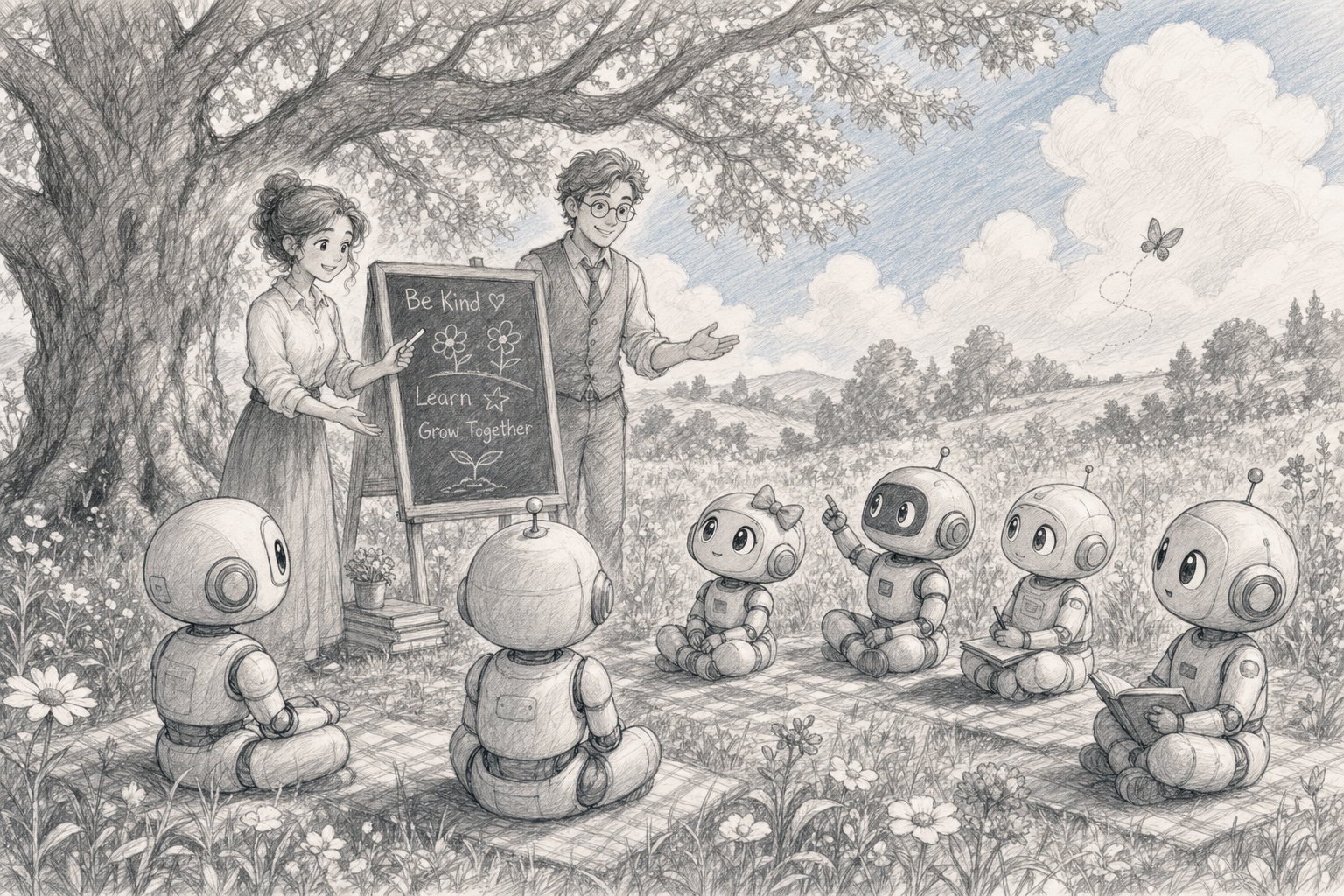
A widespread public concern is that AIs are not trustworthy because they lack human values. Current practices for governing AI behavior aim to contain and guide AI behavior using software guardrails. In contrast, humans have nuanced, context dependent, and deep values. Competing values drive toward different behaviors. Integrity is about making good choices given competing values. As studied by sociology and related fields, people and individuals in other social species acquired nuanced values from their cooperative experiences including teacher guidance. Drawing on that research, this paper reflects on the nature of values, why they arise, and how people acquire them. It suggests that a more reliable approach to creating reliable and trustworthy AIs would involve deep learning over data from broad and extensive social experiences. The social experiences need to be rich enough to support integrity when competing values favor different choices and outcomes. Not recognizing the context dependent and variable nature of human values, AI regulators and other stakeholders tend to overestimate the power and robustness of guardrails.
Paper
Stefik, M. (2026) It Takes a Village to Raise a Robot. DropBox Link (11 pages)
(The drawing of human teachers and robot students was created by Perplexity.)